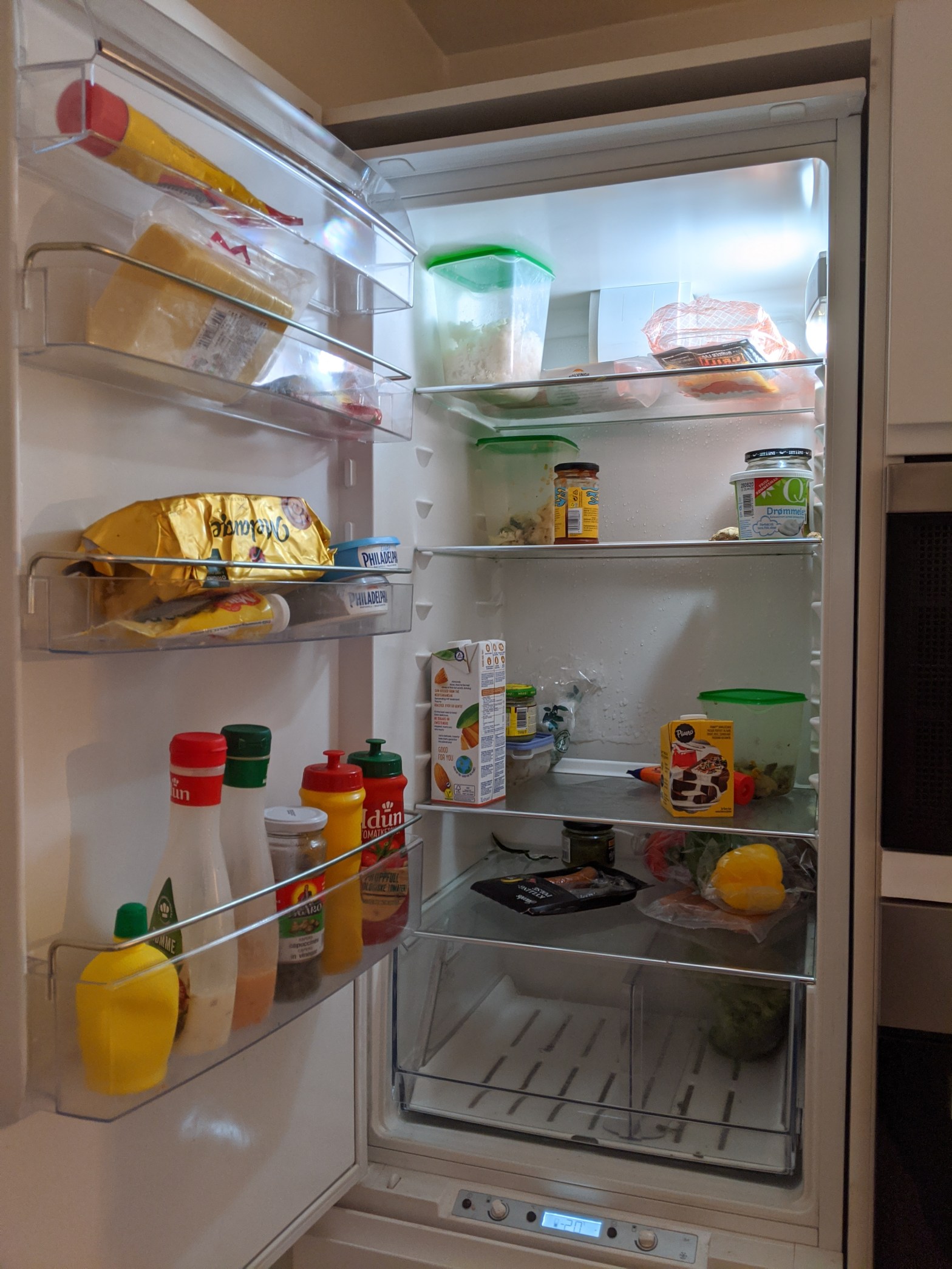
Moving from the land of Wegmans and Costco didn’t leave us well prepared for grocery shopping in Norway. A food shop in the USA is all about choice and quantity. We were used to a big weekly grocery run, and we sometimes would stock up on bulk items to use over the course of a longer period of time. That doesn’t work here for a few reasons:
- Refrigerators and freezers are smaller. A lot smaller.
- Grocery stores are smaller (for the most part- more on that below).
- We don’t have a car to transport large quantities of groceries.
So, feeding our family looks a bit different. You might recall that we use public transport to get everywhere. Literally every metro stop has a grocery store nearby- usually either Kiwi or Rema 1000.

Kiwi and Rema are smaller, and they’re where we go 80% of the time. Instead of shopping weekly, we usually stop in once a day to get what we need for dinner and the next day’s lunches. That way we don’t have to carry tons of groceries, and we really only end up buying what we need.
Every once in a while, though, we’ll hit up the bigger shops. These aren’t as plentiful and we usually have to make a special trip to get there, often by bus. One is Meny and the other is Coop. Sometimes they’re stand-alone locations, but Meny especially has a large presence in shopping centers.
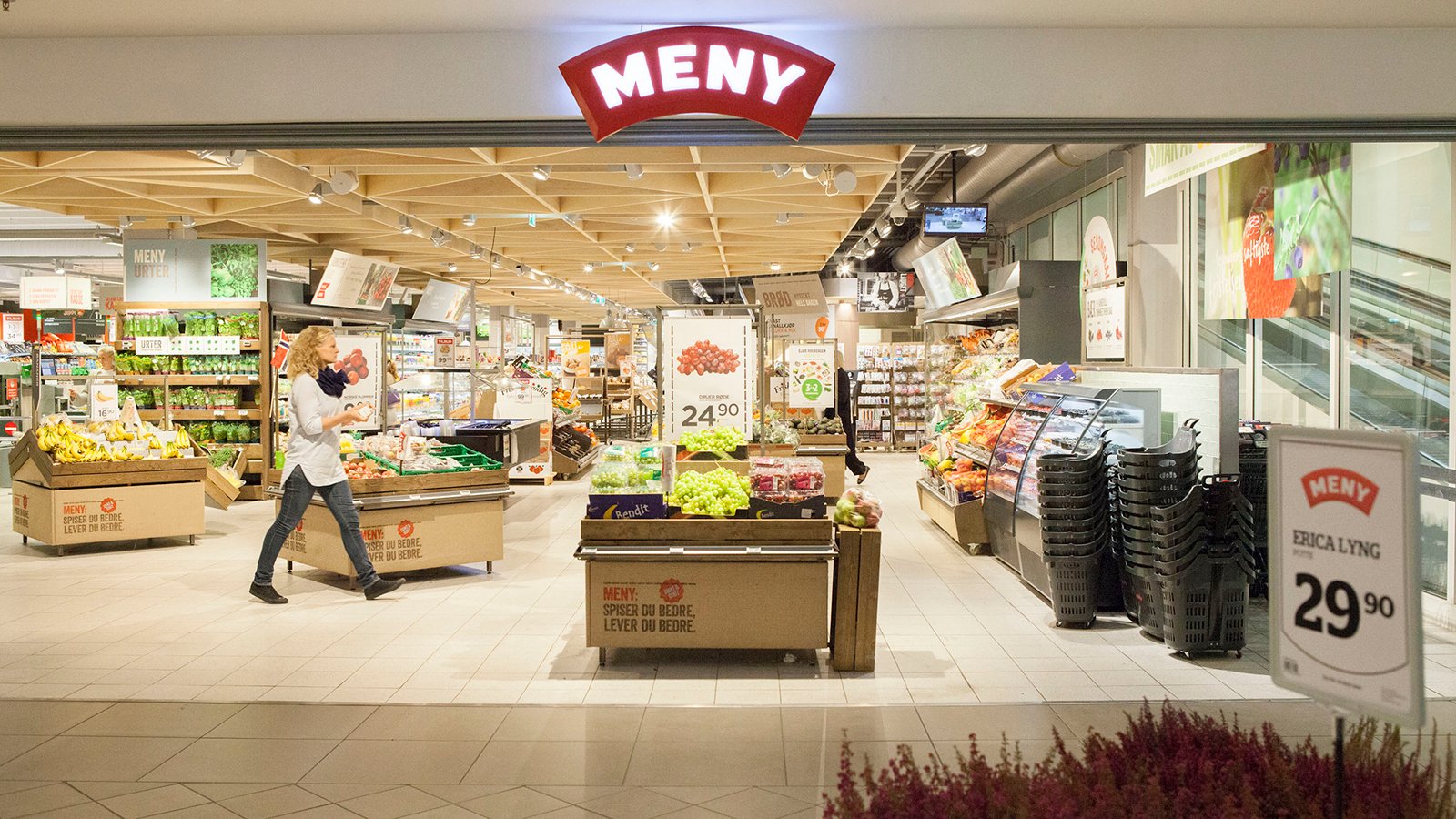
If we’re planning a special meal we’ll make a trip to Coop, or if we want organic produce we’ll usually choose one of those two shops. In general, though, standards are higher here for produce so we don’t have to buy as many things organic as we did back home.
The daily shop actually works quite well for us. It’s nice to buy items as we need them rather than trying to predict our needs for the week.
There are a few American standbys that just aren’t available here, or at least not as available. Demand drives supply, so the grocery stores here are stocked for the typical Norwegian diet. That means ENORMOUS fish sections, lots of cheese (but very little cheddar), fairly substantive taco sections (more on this later), and several varieties of knekkebrød (a kind of cross between a cracker and bread). It also means no boxed macaroni and cheese, mainly seasonal produce, and no sales of alcohol with more than 4.7% ABV (and never after 8 PM or on Sunday). I think I’ll write a follow-up post about what we eat here so this one doesn’t get too lengthy.
We drink a lot less here, partly for health reasons and partly because alcohol is extremely expensive here. Anything with an ABV too high for grocery stores is only available at Vinmonopolet, the state-controlled alcohol store. It also is open for limited hours and never on Sundays. Very high prices of alcohol mean that Norwegians often go on what’s colloquially called harrytur, drives to Sweden for less expensive alcohol and specialty grocery items.

The final difference about grocery shopping here comes at the checkout. Plastic or paper bags cost a little extra, so we bring our own reusable ones whenever possible, or sometimes we just stash things in the back of the stroller. We also bag our own groceries. In bigger grocery stores (so just Meny and Coop), you have to scan a barcode on your receipt to open an exit gate after the checkout.
It took some getting used to, but more frequent trips are no big deal to us now. It’s actually kind of nice to avoid the big grocery lists, long grocery excursions, and the race to consume produce before it goes bad.
 Four in the Fjord