Featured

We Made It!

On 6 January 2020, we loaded into Josh’s parents’ 12-passenger van with Alyssa’s parents, Josh’s dad, eight enormous duffel bags, one suitcase, and two strollers. We drove across the Canadian border to Toronto where we kissed and hugged everyone goodbye and got ready for our adventure.

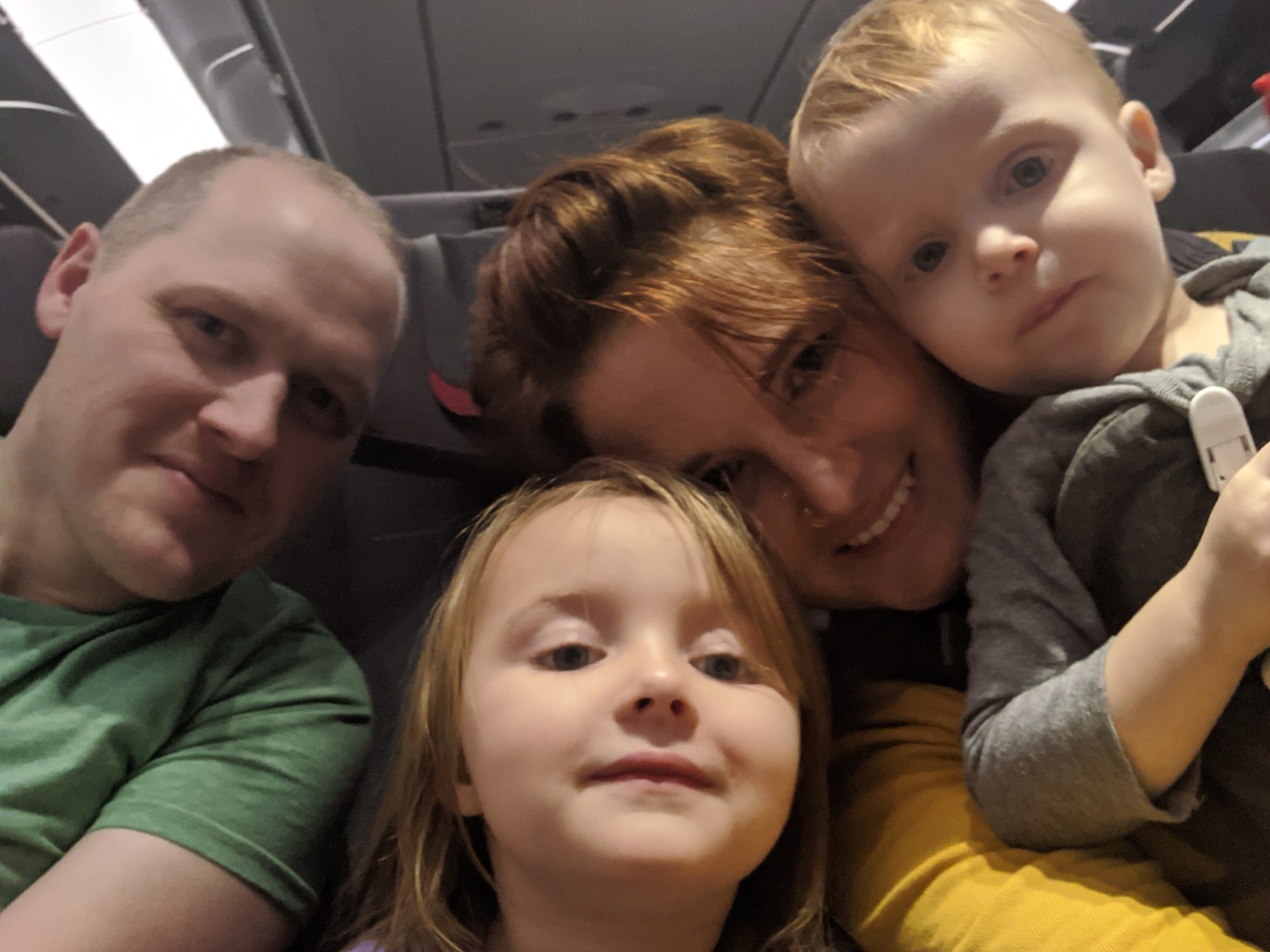
The trip from Toronto to Lisbon was a dream. We flew TAP Air Portugal and were seated in an enormous front middle row where we were brought a bassinet as well as goodie bags for the kids full of crayons, toy airplanes, neck pillows, bibs, cards, and even a diaper changing pad. The time difference was jarring– we were woken up at what felt like 3 in the morning to us and offered mushroom chicken dinners (hard pass from these vegetarian travelers)– but the hospitality was undeniable.

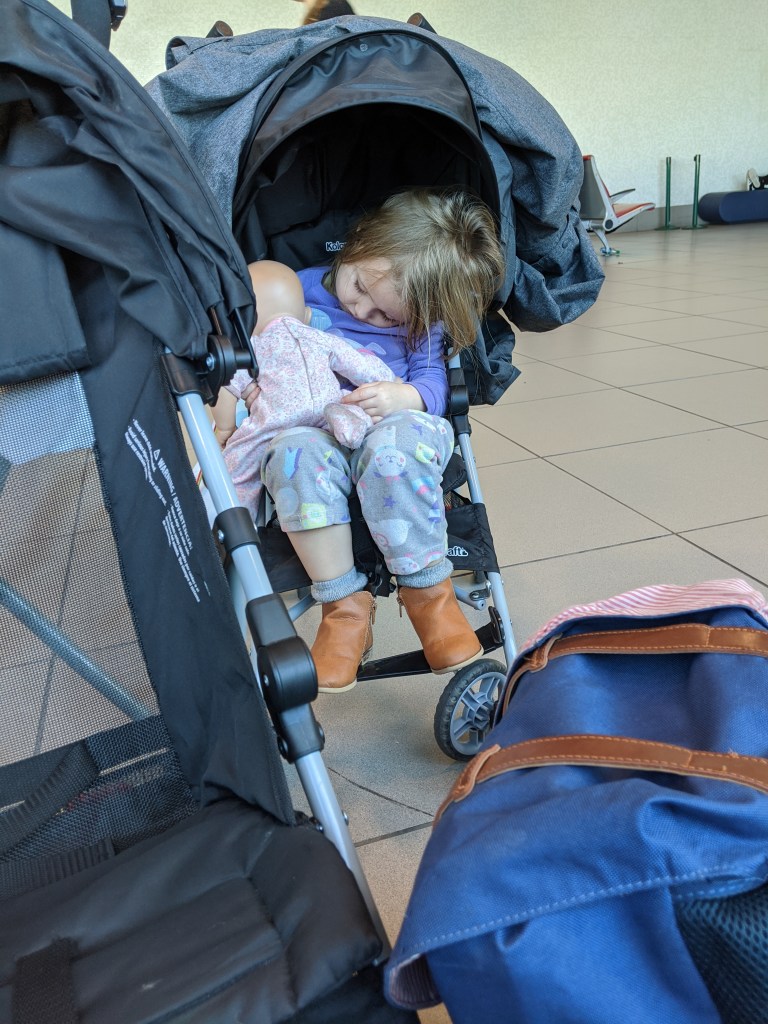
From Lisbon we had just a short flight to Oslo, and both kids remained totally pleasant, maybe because they were so sleepy. Adina and Ruby were certainly out cold for the whole layover.
The landing at Gardermoen was a bit unbelievable– just miles and miles (kilometers and kilometers?) of gorgeous Nordic forest and then BOOM! airport runway. I’d never been to an airport with pristine hardwood floors in the terminal, and we thought we were accidentally sneaking into the country when we walked through the green “nothing to declare” customs gate without seeing a single other human, but such is life in Norway! We ordered a taxi with a handy digital kiosk, and a half hour later were happily resting in our AirBnB. Home for the next six months.

It’s a single young woman’s apartment that she rents out on AirBnB while she studies in China. Two bedrooms, a bright living/dining room leading to a balcony, a bathroom with the standard-issue Norwegian heated floors, and a very sleek, brand new IKEA kitchen. It’s a bit odd to know that we’re essentially camping out in someone else’s home for six months. She’s left behind a lot of her things, but I’m sure it will start to feel more like ours once we’re unpacked and settled in for a couple weeks. For now, I don’t particularly care as long as we can finally get some sleep.
Grocery Shopping

Moving from the land of Wegmans and Costco didn’t leave us well prepared for grocery shopping in Norway. A food shop in the USA is all about choice and quantity. We were used to a big weekly grocery run, and we sometimes would stock up on bulk items to use over the course of a longer period of time. That doesn’t work here for a few reasons:

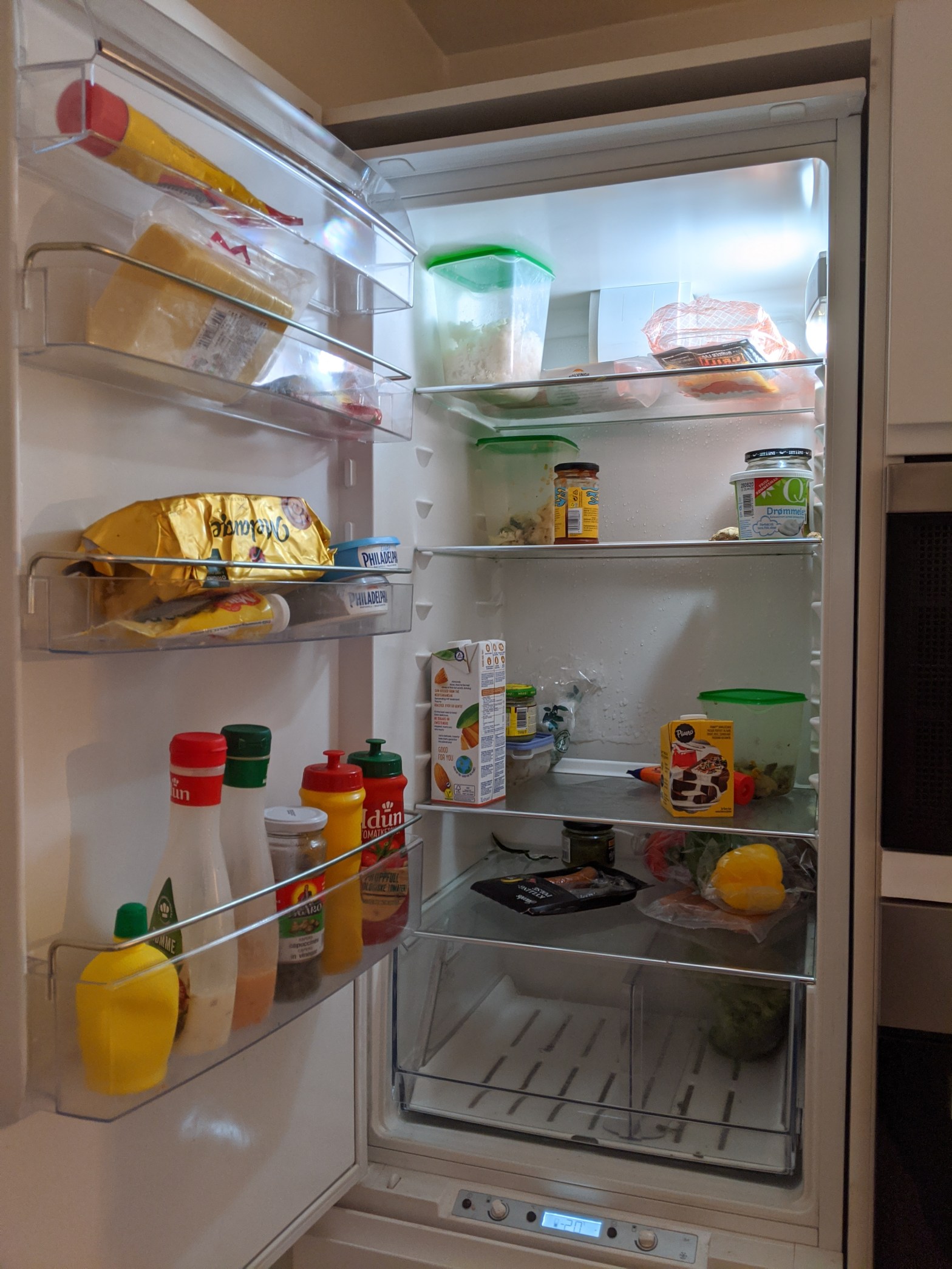
  1. Refrigerators and freezers are smaller. A lot smaller.
  2. Grocery stores are smaller (for the most part- more on that below).
  3. We don’t have a car to transport large quantities of groceries.

So, feeding our family looks a bit different. You might recall that we use public transport to get everywhere. Literally every metro stop has a grocery store nearby- usually either Kiwi or Rema 1000.

All the staff at Kiwi wear lime green everything. Even hijab when applicable.
We called it “Rema One Thousand” for weeks before we realized that it’s actually “Rema Tusen.” Oops!

Kiwi and Rema are smaller, and they’re where we go 80% of the time. Instead of shopping weekly, we usually stop in once a day to get what we need for dinner and the next day’s lunches. That way we don’t have to carry tons of groceries, and we really only end up buying what we need.

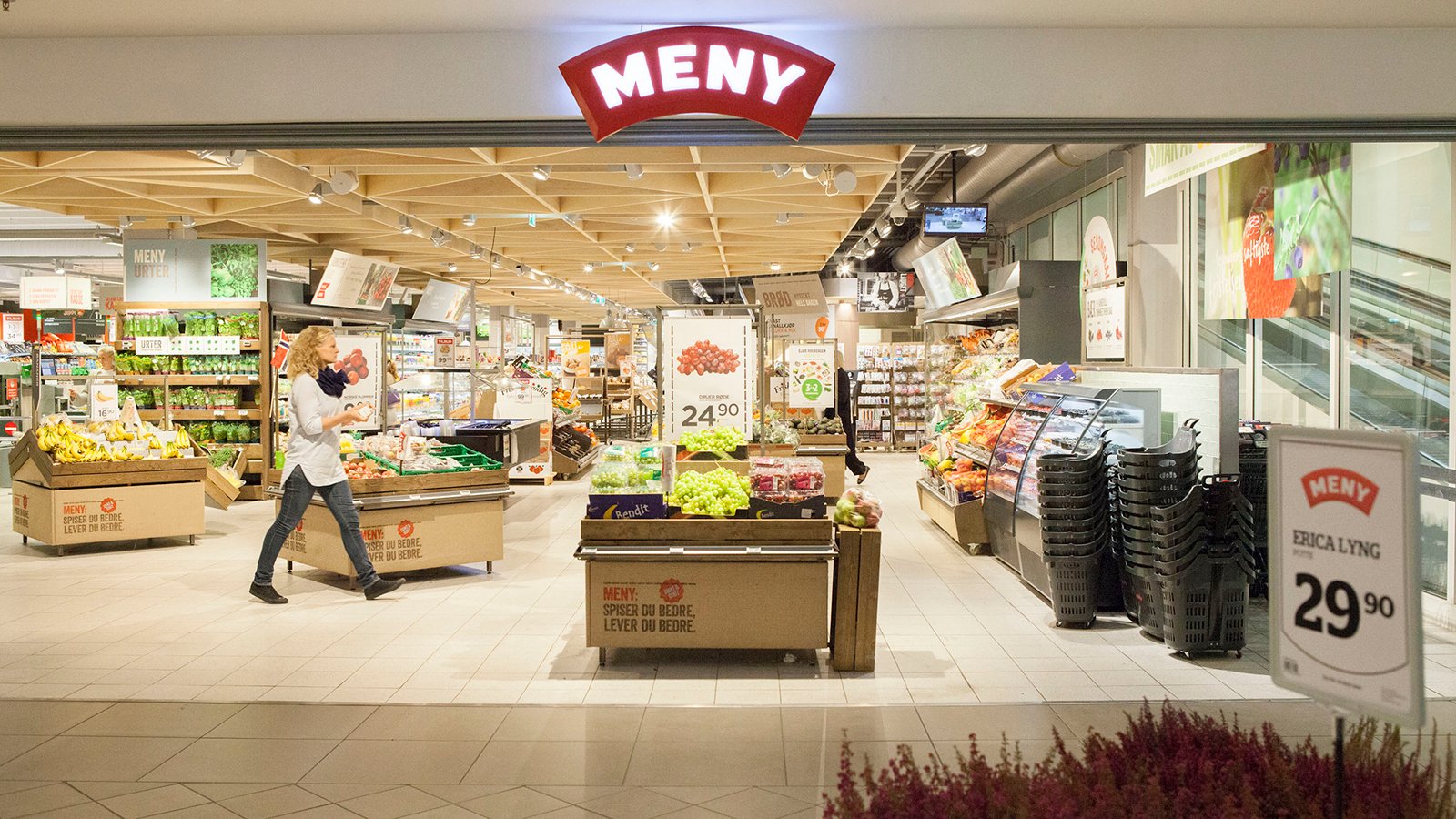
Every once in a while, though, we’ll hit up the bigger shops. These aren’t as plentiful and we usually have to make a special trip to get there, often by bus. One is Meny and the other is Coop. Sometimes they’re stand-alone locations, but Meny especially has a large presence in shopping centers.

Meny reminds us a bit of Wegmans. Similar lighting and branding, but no samples and not as much choice. It’s also the priciest of all the grocery stores.
Coop probably has the greatest selection of any of the grocery stores. It also sells things in larger quantities.

If we’re planning a special meal we’ll make a trip to Coop, or if we want organic produce we’ll usually choose one of those two shops. In general, though, standards are higher here for produce so we don’t have to buy as many things organic as we did back home.

The daily shop actually works quite well for us. It’s nice to buy items as we need them rather than trying to predict our needs for the week.

There are a few American standbys that just aren’t available here, or at least not as available. Demand drives supply, so the grocery stores here are stocked for the typical Norwegian diet. That means ENORMOUS fish sections, lots of cheese (but very little cheddar), fairly substantive taco sections (more on this later), and several varieties of knekkebrød (a kind of cross between a cracker and bread). It also means no boxed macaroni and cheese, mainly seasonal produce, and no sales of alcohol with more than 4.7% ABV (and never after 8 PM or on Sunday). I think I’ll write a follow-up post about what we eat here so this one doesn’t get too lengthy.

We drink a lot less here, partly for health reasons and partly because alcohol is extremely expensive here. Anything with an ABV too high for grocery stores is only available at Vinmonopolet, the state-controlled alcohol store. It also is open for limited hours and never on Sundays. Very high prices of alcohol mean that Norwegians often go on what’s colloquially called harrytur, drives to Sweden for less expensive alcohol and specialty grocery items.

There’s a huge selection at Vinmonopolet, but it’s quite pricey. We usually opt for more economical options like boxed wine.

The final difference about grocery shopping here comes at the checkout. Plastic or paper bags cost a little extra, so we bring our own reusable ones whenever possible, or sometimes we just stash things in the back of the stroller. We also bag our own groceries. In bigger grocery stores (so just Meny and Coop), you have to scan a barcode on your receipt to open an exit gate after the checkout.

It took some getting used to, but more frequent trips are no big deal to us now. It’s actually kind of nice to avoid the big grocery lists, long grocery excursions, and the race to consume produce before it goes bad.

Getting Around Oslo

(A Ruter Appreciation Post)

Life without a car is going to be an adjustment, but of all the cities where we could learn how to get around with public transport, Oslo seems to be one of the best.

Ruter is the name of the public transit system, and for 770 NOK a month per adult (about $75 USD), we have access to all the metros, trains, trams, busses, and ferries in zone 1, which is pretty extensive and contains the entire metro system. They even have a few self-driving electric busses! If we ever do have occasion to travel outside zone 1, you can use the app to add a zone for the day at just an extra 60-80 NOK ($6-$8ish).

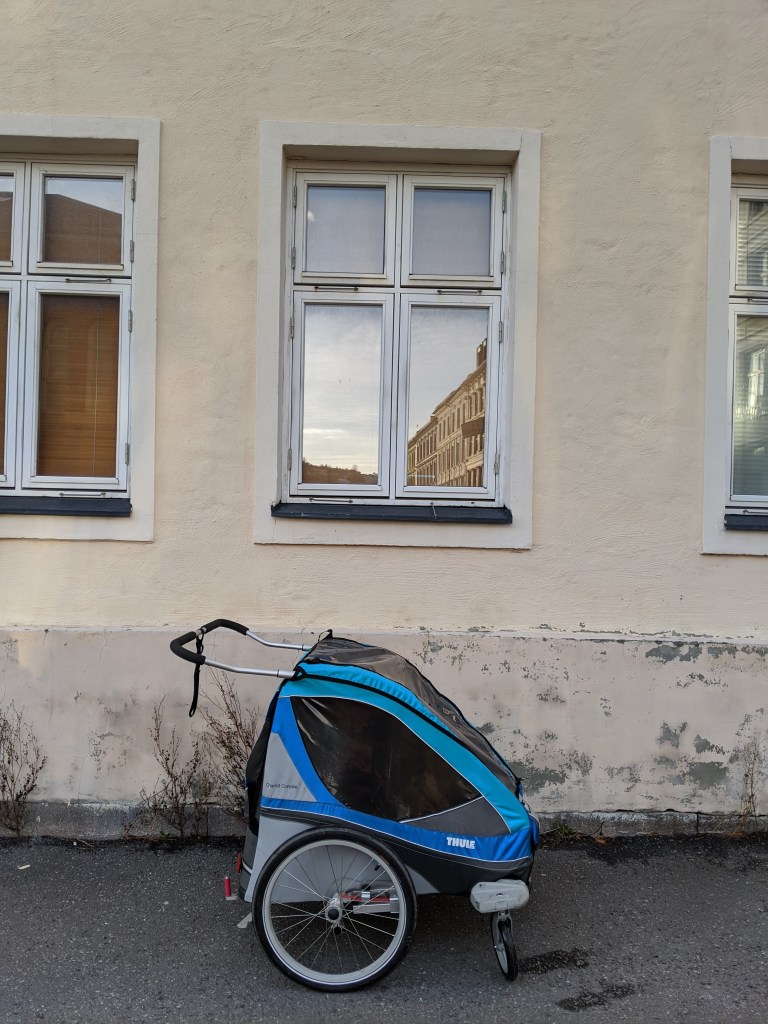
Everything is super clean, and Norwegians seem to be quite reserved, so all our excursions so far have been very manageable. We did invest in a larger stroller that’s also towable by bicycle, though, since we’re doing a lot more walking than we used to.

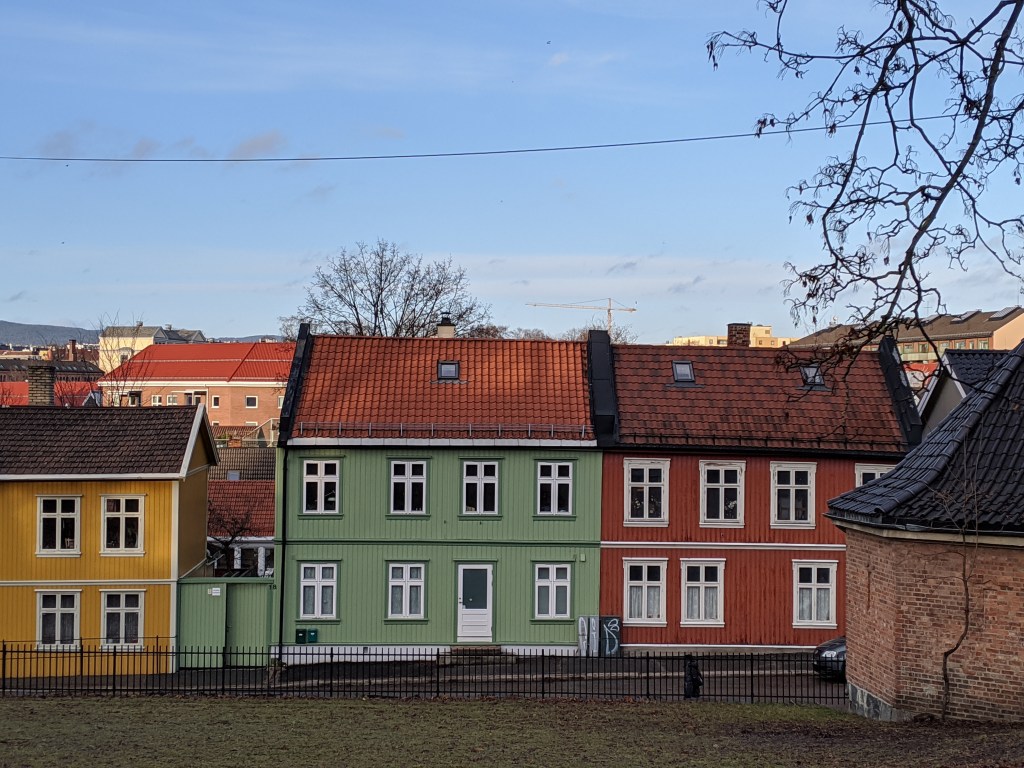
The Norwegian equivalent to craigslist is Finn, and we used it to find an awesome THULE brand stroller. That meant a bus trip to nearby Vålerenga to pick up our find.

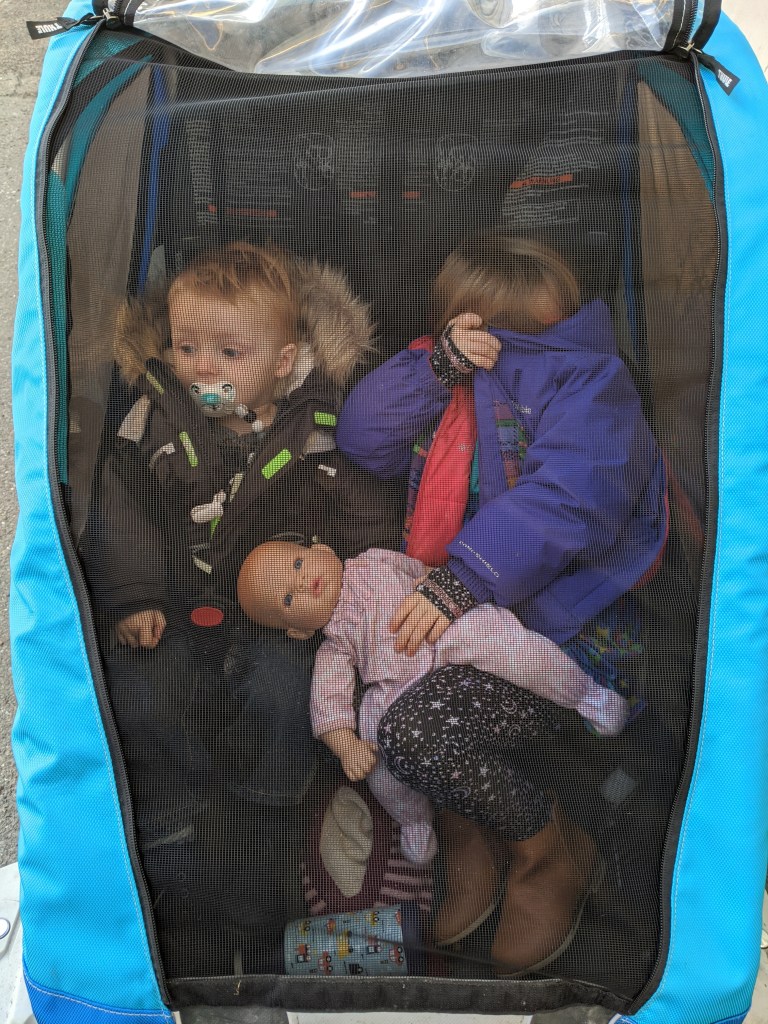
Such a sweet little neighborhood, and such an awesome, heavy-duty stroller! There’s space on all the metros, busses, trams, ferries, and trains for it, and it makes such a big difference to be able to push them right onto transit in a stroller that also fits our bags, coats, and such.

One interesting thing about the metro especially is that there isn’t any mechanism for swiping into the stations. You keep your ticket in an app on your phone, and occasionally they spot-check at the exits. Anyone without a ticket that was valid at the time of the ride gets a fine. It’s definitely a system that relies on trust and a generally compliant population, but it seems to be working!